
Quick answer: Lithium battery storage is popular because it can provide high usable capacity, efficient daily cycling and relatively low routine maintenance. It still needs correct sizing, compatible charging controls, thermal protection and professional installation.Practical advantagesLithium systems commonly allow a greater portion of their rated capacity to be used, which can reduce the physical size of storage for a given backup target. They also work well with monitoring and battery management systems.Compatibility is essentialConfirm battery voltage, inverter approval, charge and...
Quick answer: A solar generator normally combines a battery, inverter and charging inputs in one portable unit, while a fuel generator converts combustion into electricity. The better choice depends on load size, runtime, mobility, noise, fuel access and whether you need repeated daily cycling.Compare the operating modelSolar generators are quiet at the point of use and can be recharged from panels or mains, but their runtime is limited by stored capacity. Fuel generators can run for longer with refuelling, but...

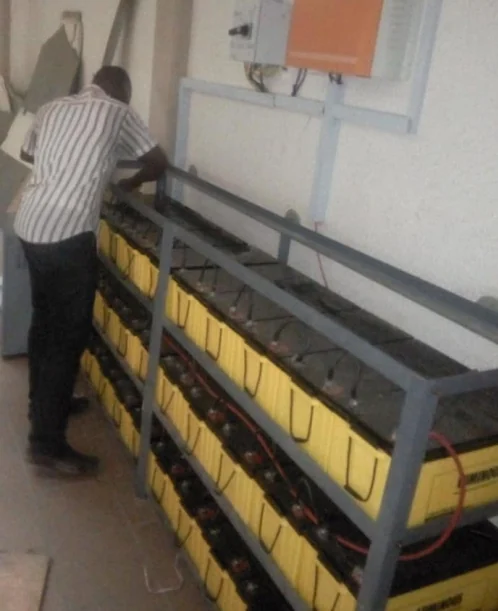
Quick answer: Battery storage determines how much of your solar energy remains available after sunset or during an outage. For off-grid Nigerian systems, the best battery is the one that matches the daily load, expected autonomy, temperature, budget and service capability.The measures that matterCompare nominal capacity with usable capacity. Also check the recommended depth of discharge, continuous discharge current, cycle rating, operating temperature, enclosure and battery management system. These details provide a more useful comparison than amp-hours alone.Lithium versus lead-acidLithium...
Recent Posts
-

Solar Energy for Small Businesses: A Resilience Plan
22 September 2026 -
Why Lithium Battery Storage Is Popular for Nigerian Solar Systems
22 September 2026 -

A Buyer’s Checklist for 400W and 500W Solar Panels in Nigeria
22 September 2026 -

How Security and Safety Systems Support Solar Infrastructure
22 September 2026 -
Solar Installation Training in Nigeria: Skills That Matter
22 September 2026